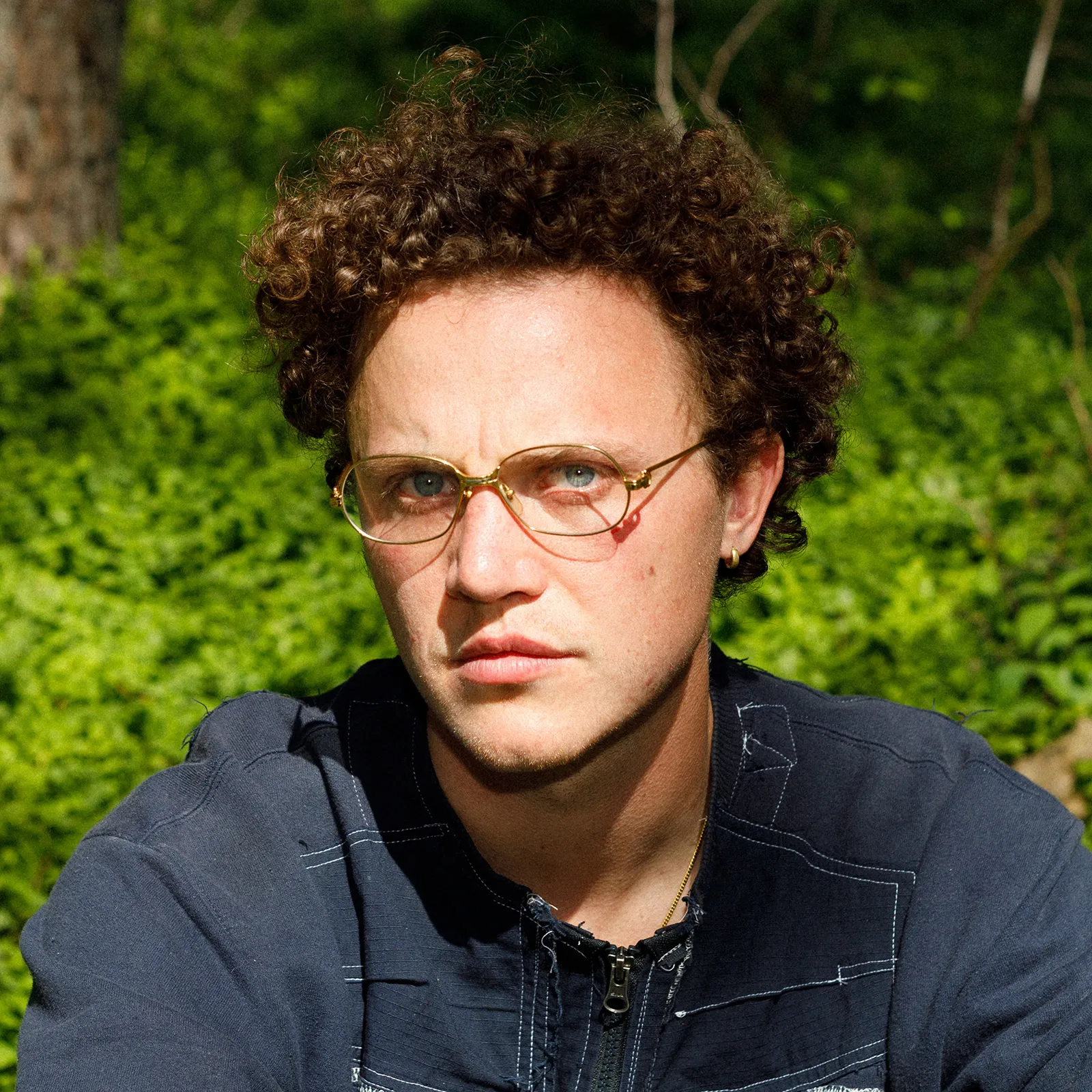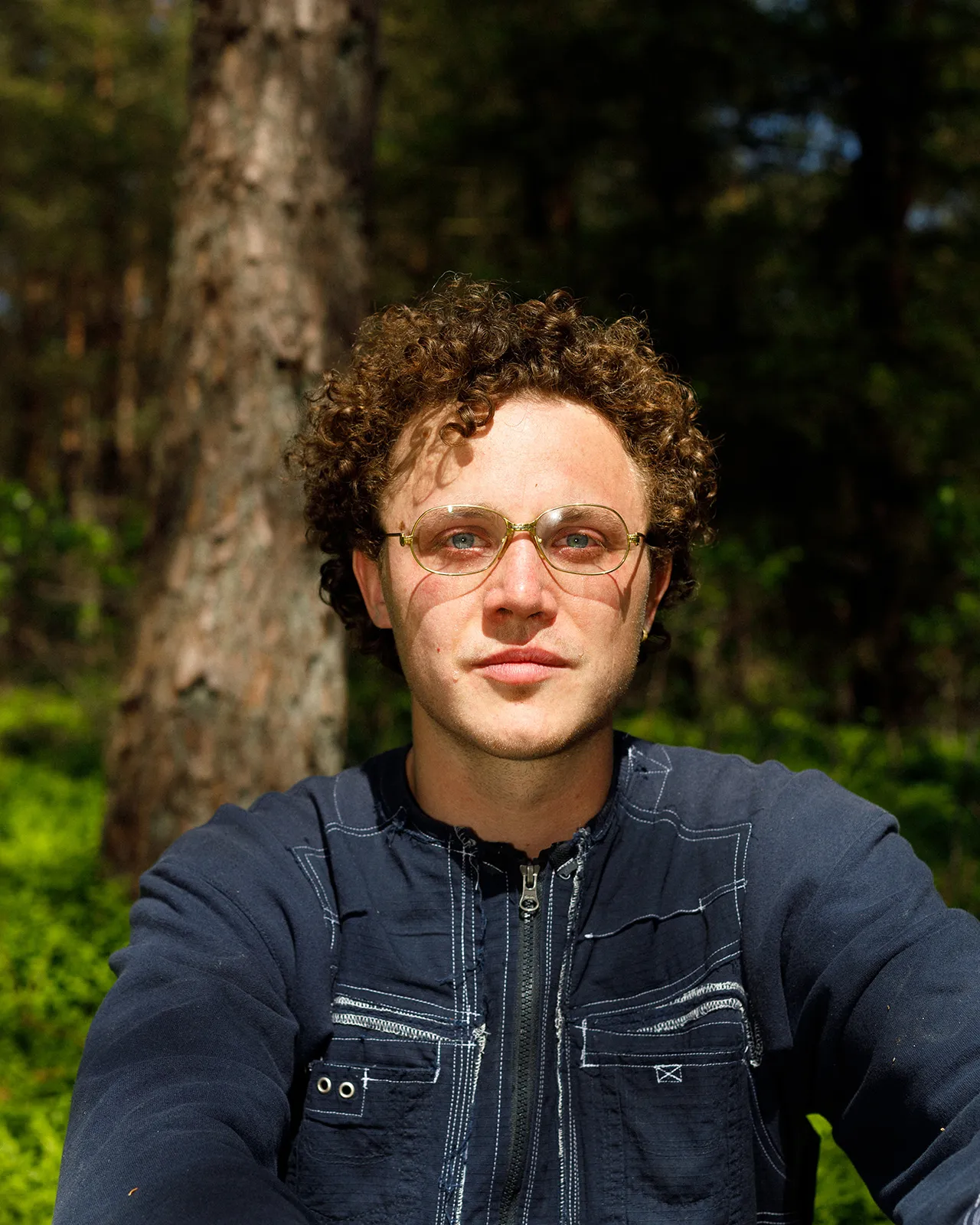
Ozzy Jones releases between you and me today via Intercept Records, marking not only the arrival of his debut album but also his first live show tonight at Centrale Markthal in Amsterdam. The project was born from a moment that rewired everything: the epileptic seizure he suffered in 2019 that forced him into isolation, reflection and the slow work of confronting fear. What followed was a world built from scratch through electronica, indie textures and an urgent need to reconnect.
The album carries the imprint of that transformation. As Ozzy shares, “after my first seizure, everything I knew about myself and the world shattered. Music became the only place I could process the intensity of those feelings.” Between you and me opens that inner space to others, inviting listeners into the vulnerability and self-discovery that shaped it. Tonight’s debut performance, supported by Possibilities Open Studio with a dance piece by The Current Collective, brings that journey into the physical world.
How are you feeling as you step into this week, knowing the album is finally becoming real?
It’s surreal. This is something that I have been working on for such a long time… I can’t really fathom that on Friday it’ll be out there for the world to hear. It makes me proud, excited, and of course a little nervous. I have never been this vulnerable so publicly.
Your seizure in 2019 broke open the life you thought you knew. What part of yourself did you have to meet for the first time after that moment?
I was always a pretty happy and relaxed guy, and the seizure flipped that upside down. From one day to the next, I became hyper sensitive to the world around me. Very little stimuli would trigger a heavy fight or flight response, leaving me in a state of perpetual fear, anxiety, and survival. Whether this was true or not, I don’t really know. But it was a long period (years) in which I perpetually felt very unsafe. So I guess I met my scared/anxious side? I had, of course, been scared and anxious before, but not to this extent and for this period of time. Unfortunately, I still experience these feelings quite regularly, so I’ve had to change my life and lifestyle to mitigate these states of fear.
Solitude played a huge role in the beginning of this project. How did being alone change the way you understood your own emotions?
I hated solitude before. After I had my seizure, that didn’t change (laughs). It was very confronting, to be honest. When you’re alone, you can’t hide! The dark headspace I found myself in, combined with this new sensitivity, made this a very intense and painful period. The biggest thing I had to learn was to be honest about how I was feeling. For a long time, I tried to pretend to be ok when I wasn’t. Being honest, open and vulnerable about my emotions (even if just over the phone) was probably the biggest thing I learnt from this time in solitude.
You’ve shared a few pieces of the album already, with Nanai as the focus track. What parts of yourself were you revealing with each release?
Each track on the album is a snapshot. The good, the bad and the ugly of these past years. Nanai, for example, is a song about love. Sometimes you meet someone and it feels like a firework, adrenaline mixed with something electric. A feeling like this never lasts forever; the connection was actually quite brief. But in that connection, in that feeling of being alive, there was a reminder that even these kinds of fleeting moments can be healing.
“I hated solitude before. After I had my seizure, that didn’t change (laughs). It was very confronting, to be honest. When you’re alone, you can’t hide!”
Between you and me blends electronica and indie, and it conveys a sense of someone rebuilding themselves from the inside. How did you shape the sound around what you were living emotionally?
I guess in that way: many people journal to process their emotions, and I like to write songs to do the same. It’s cathartic. I never start with any intentions as to what I want to produce; I just start making something. It’s totally improvised. The result is therefore generally a reflection of whatever I am feeling that day. Certain melodies, certain drums and certain words resonate in a moment, I think it’s basically pure intuition. If you make music for no-one other than yourself, you can follow whatever tangent feels right and then all of a sudden you have a track. I also optimise my workflow to be able to record music whenever I want (and in the quickest way possible).
Two examples. First one, always having Ableton open on my laptop with a project open; this allows me to work on it whenever I feel like it, there’s no pressure, no rush, and if I feel like starting something new, I always do. And second, I record vocals with a gamer headset. No joke. All vocals in any of my music, EVER, have been recorded using a forty euro gamer headset as it allows me to quickly get vocals recorded or sketch moods (instead of having to plug in all this gear ruining the entire creative experience). I also don’t have a studio, so I love to make music wherever I am: plane, train, car, but more often than not, the couch!
Two examples. First one, always having Ableton open on my laptop with a project open; this allows me to work on it whenever I feel like it, there’s no pressure, no rush, and if I feel like starting something new, I always do. And second, I record vocals with a gamer headset. No joke. All vocals in any of my music, EVER, have been recorded using a forty euro gamer headset as it allows me to quickly get vocals recorded or sketch moods (instead of having to plug in all this gear ruining the entire creative experience). I also don’t have a studio, so I love to make music wherever I am: plane, train, car, but more often than not, the couch!
On a personal level, what was the hardest truth you had to admit to yourself while making this album?
That I was not ok. I would love to be, but I wasn’t. The album is an insight into how I felt, which I guess I don’t always let people see. I’d like to think I do, but I don’t always fully let people into this side of myself.
The idea of masculinity shifted for you during this whole process. What expectations or pressures did you have to let go of in order to feel like yourself again?
Similar to the above, it was admitting I was not ok and letting people know. When they said, but Oz, you’ll be alright; I said, no, I am really not doing ok. Men are much freer to express vulnerability today but we can still do it more. In Australia, where I grew up, the biggest killer of men under twenty-five is themselves. This is shocking. Every opportunity I get to be vulnerable and honest, this can be in both happiness and sadness, I try to take. Even if it is terrifying.
Your family is present in the DNA of this record. When you look at the album cover or think of your mother’s influence on the name, what feelings arise?
I feel pride, so much pride. The cover is a lino-etch my sister made when she was sixteen. It’s insane, no? Twelve years later it found its way onto the front of my record. And the name, between you and me, is an ode to my mother’s 90s kids fashion label. I think it’s awesome to be able to collaborate with my family to make such a personal body of work come alive.
“After my first seizure, everything I knew about myself and the world shattered. Music became the only place I could process the intensity of those feelings: loss, identity, solitude and emotional truth.”
Your work moves between sound, visuals and storytelling as if they were one thing. Does expressing yourself across different mediums help you process what you’re feeling in ways music alone can’t?
Absolutely. The impact of between you and me is exponentially higher due to the intersection of sound, visual and storytelling. Music can do a lot, but paired with the right visuals, it speaks more to us as multiple senses are being stimulated. Storytelling is one of the oldest forms of human connection. And by telling my story, I feel like people understand me, my music and what I stand for far better.
When you look back at your earlier releases, who were you then compared to the person you are now?
Those releases, I love too. But they represent a different side of me, the side that you may see out at a party. This side of me is absolutely still alive. I guess I am introducing the creative world to the other side of me too.
There’s a strong urgency in the way you describe this project. What were you afraid would happen if you didn’t share this story now?
After my first seizure, everything I knew about myself and the world shattered. Music became the only place I could process the intensity of those feelings: loss, identity, solitude and emotional truth. This project is my way of reclaiming space, not just for myself, but for anyone navigating the gap between vulnerability and strength. I feel I owe it to the version of me who was silent, afraid and disconnected to now speak loudly, honestly and with conviction.
Some tracks, like asking your name or layer of love, hold a lot of emotional weight. Was there a moment during the process when the music felt too close to touch?
No, it’s never too close. The closer it gets, the better, but also the heavier it is to make. I have cried many times whilst writing many songs on this album. Literally just sitting there behind my computer, bawling my eyes out whilst I sing or produce. It took me years to feel comfortable releasing music like this, so I don’t think it was ever too close for me to touch whilst producing it, but maybe it did feel too close for others to touch? That’s why it took a long time to come out.
And now, with the release days away, what do you hope people will understand about you, and about themselves, when they listen to the album alone?
I hope that they can be transported into the different emotions I felt during these years. And understand that even though all that happened, I am ok. And they will be too. At the end of the day, the album is just saying: DON’T BE AFRAID TO BE YOURSELF in whatever format, way, emotion or state that may be.